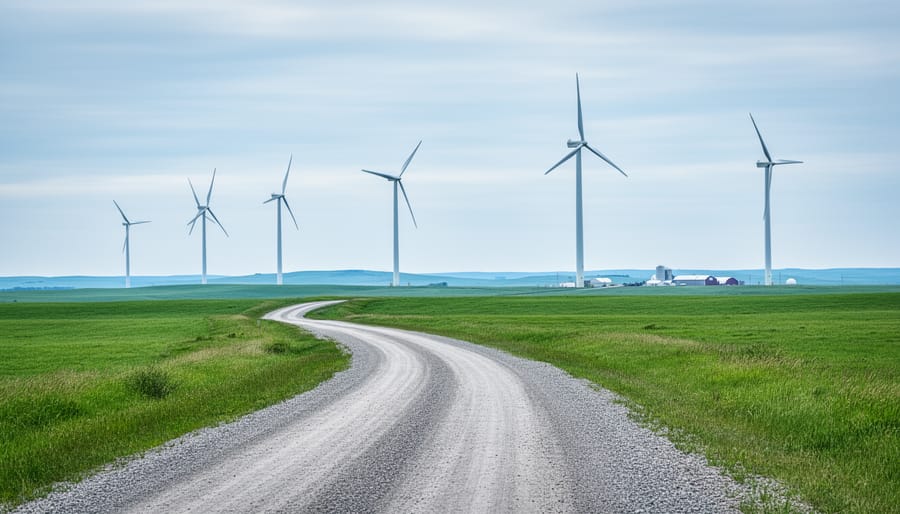

Canada’s renewable energy sector is hiring, and the opportunity reaches well beyond the solar panels and wind turbines you can see from the highway. Roles span installation, engineering, operations, project management, and the skilled trades, and many sit underground, in tunnels, cable corridors, and storage sites that quietly make clean power possible.
The numbers back it up. Energy Human Resources Canada (EHRC) forecasts that 6,000 to 8,000 additional renewable energy workers will be required by 2030. Right now, 13.1% of renewable energy roles remain unfilled. That’s a real gap, and it’s an invitation.
Help is on the way for people ready to step in. Pathways to Power is a national initiative designed to modernize workforce development across Canada’s electricity sector. This new five-year effort is supported by a $6.87 million investment from the Government of Canada’s Sectoral Workforce Solutions Program, which has committed up to $94.5 million over five years overall.
So whether you’re a student mapping out a first career, a tradesperson ready for a change, or a sector veteran looking at what’s next, this guide breaks down the roles in demand, the skills that matter, and the training paths that can get you started. We’ll also look at how local communities shape these projects, and why your voice belongs in that conversation.
Why Canada’s Renewable Projects Are Creating Careers
From Panels to Power Lines: The Work Behind the Projects
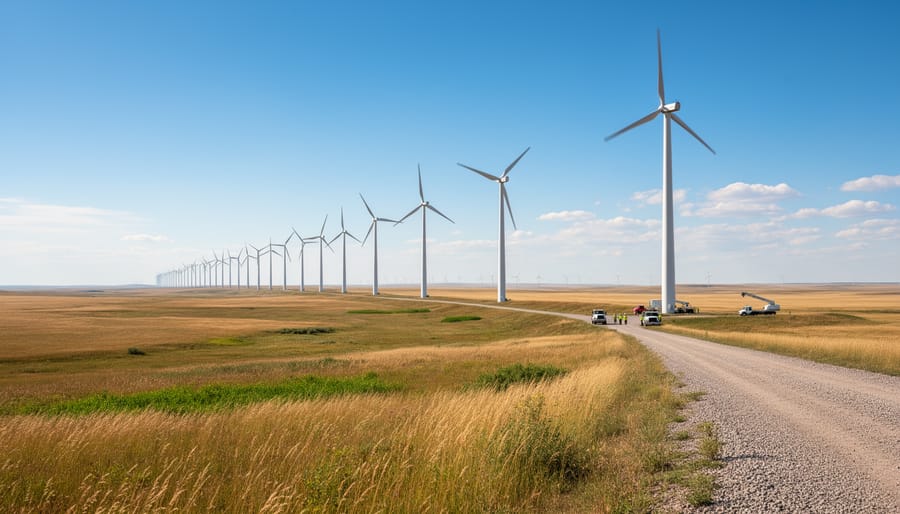
Every renewable project starts long before the first turbine blade or solar panel goes up, and people are needed at each step along the way. Here’s how the work typically unfolds, and where the jobs show up:
- Planning and permitting: Environmental assessment specialists, geoscientists, surveyors, and project developers study the site, check the ground and groundwater, and work with local communities.
- Construction: Heavy equipment operators, electricians, installers, and site supervisors prepare the land, build foundations, and put the equipment in place.
- Grid connection: Electrical engineers, line workers, and commissioning technicians link the project to the power system and test that everything runs safely.
- Operations and maintenance: Plant operators, technicians, and data analysts keep the system running and catch problems early.
Not all of this work happens in the field. Manufacturing is part of the story too. Canadian Solar, for example, has been making solar panels, inverters, and energy storage solutions since 2001, which means factory floors, quality teams, and logistics crews are part of the clean energy workforce alongside the people in hard hats.
Think of it as a relay race. Each stage hands off to the next, and each one opens doors for different skills. Someone who starts in construction might move into commissioning, while a data-minded newcomer might begin in a control room. That variety is good news if you’re exploring a switch into the sector, because there’s rarely just one way in.
The Numbers: Hiring Demand and Workforce Gaps
Let’s put some real numbers behind the opportunity. According to the Electricity Human Resources Canada (EHRC), the sector forecasts 6,000-8,000 workers will be needed in additional renewable energy roles by 2030. That’s a lot of new colleagues, and every one of them will start somewhere.
There’s a second figure worth knowing. Right now, 13.1% roles remain unfilled across renewable energy. Employers have openings, and they’re looking for people to fill them.
Here’s the way we see it: this gap isn’t a warning sign, it’s a doorway. When a growing industry has more work than workers, that’s good news for several groups at once.
– Job seekers can find entry points in a sector that’s actively hiring.
– Career changers from fields like construction, mining, or tunnelling can bring skills that are in demand.
– Training providers have a clear reason to build programs that prepare people for these roles.
It’s worth being honest about what these numbers do and don’t tell us. They show the scale of demand and the share of roles waiting for the right candidate. They don’t tell us about specific employers, pay, or where each job will land, so we won’t guess at those details here.
What they do offer is a hopeful, grounded starting point. Canada’s clean energy sector is expanding, and it needs curious, capable people to help build it. If you’ve been wondering whether now is a good time to explore this path, the data suggests the door is open.
Types of Renewable Energy Jobs in Canada
Hands-On Trades and Technical Roles
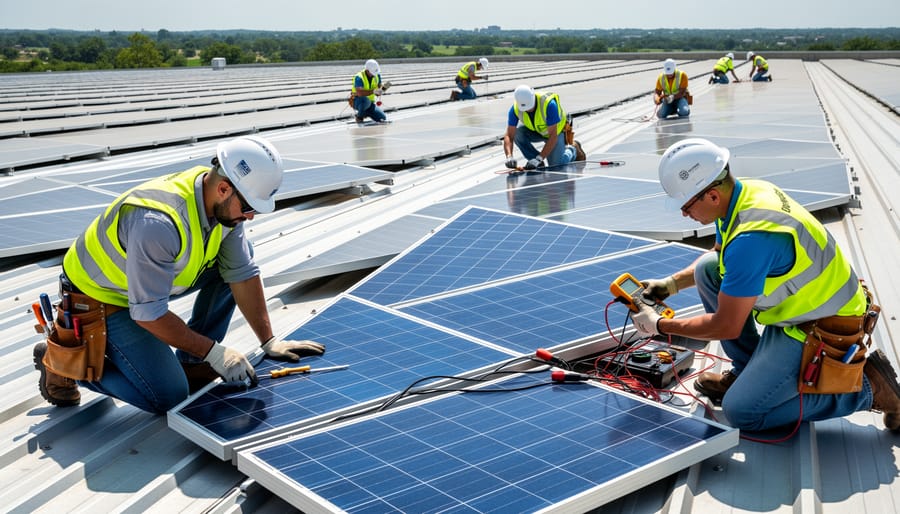
Behind every wind turbine and solar array is a crew that never makes the postcard. These are the people who wire, bolt, haul, test, and keep things humming long after the ribbon is cut. With 13.1% of renewable energy roles still unfilled, skilled hands are in real demand.
The good news is that you don’t need to start with a degree. Many of these careers begin with an apprenticeship, where you earn while you learn alongside experienced mentors. Others start with short college programs or on-the-job training.
| Role | What the work involves | Typical starting pathway |
|---|---|---|
| Electrician | Wiring and connecting solar, wind, and storage systems to the grid | Electrical apprenticeship |
| Technician | Inspecting, testing, and repairing equipment on site | College program plus hands-on training |
| Installer | Mounting panels, racking, and system components | On-the-job training |
| Heavy equipment operator | Moving earth and materials to prepare and build sites | Operator training and site experience |
Many of these skills carry over from construction, mining, and tunnelling, so experience you already have may open a door faster than you’d expect.
Engineering, Science, and Planning Careers
Behind every wind farm or solar array is a team of people who figured out where it could go and whether it should. Engineers design the systems and make sure they connect safely to the grid. Project managers keep the schedules, budgets, and crews moving in the same direction.
Earth science is where this gets especially interesting for SubterraPulse readers. Geoscientists study the rock and soil under a site to judge whether it can support turbine foundations or solar piles. Hydrogeologists look at groundwater, since a project shouldn’t disturb the water a community depends on. Geology also matters for geothermal and for any energy project that goes underground.
Environmental assessment specialists round out the picture. They study wildlife, habitat, and land use, and they help projects earn community trust by listening before building.
With roughly 13.1% of renewable energy roles still unfilled, curious problem-solvers have room to grow here.
Manufacturing, Operations, and Digital Roles
Not every clean energy job happens in a field or on a tower. Plenty of them start on a factory floor. Canadian Solar, which has made solar panels, inverters, and energy storage solutions since 2001, shows how much of the sector is about building the equipment itself. That means assemblers, quality inspectors, and production technicians.
Once systems are running, plant operators and control-room staff watch performance around the clock, spotting issues before they become outages. Data analysts study output and weather patterns to help sites run more smoothly. Some of these roles reward comfort with software and sensors, though many offer on-the-job training. For a curious problem-solver, it’s a quieter but deeply rewarding way into clean energy.
Underground Careers in the Clean Energy Story
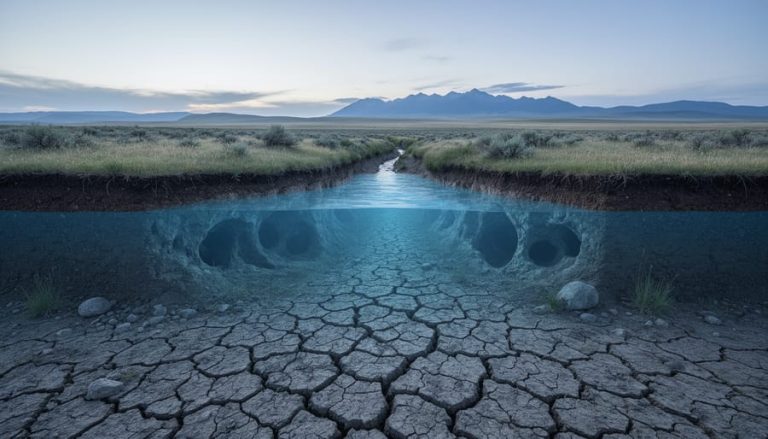
Some of the most important clean energy work in Canada happens out of sight. Long before the first turbine spins or panel switches on, crews are often working below the surface, and that makes the country’s underground heritage a natural launchpad for green careers. If you’re curious how renewable energy underground actually takes shape, it starts with a few ideas worth knowing.
- Geothermal energy
- Heat that comes from deep within the earth, which can be tapped to warm buildings or generate electricity.
- Pumped hydro storage
- A way of storing power by moving water uphill to a reservoir, then releasing it through turbines when electricity is needed.
- Tunnelling
- The engineering of passages through rock or soil, used for water conveyance, transit, and power infrastructure.
- Shaft
- A vertical or steeply angled opening that gives workers, air, and equipment access to underground works.
Canada has a proud tunnelling story to draw on. Generations of miners and tunnellers carved routes through the Canadian Shield, the Rockies, and beneath city streets, building a deep bench of know-how in rock mechanics, ventilation, and safe underground work. Those same skills now fit naturally into modern energy projects.
Think of the ways underground spaces support the clean energy transition. Tunnels can carry water for hydro systems, house buried transmission lines, and give pumped storage its underground passages. Geothermal work calls on drillers, geoscientists, and heat-system technicians. Underground energy storage concepts also lean on geology, groundwater knowledge, and careful monitoring.
The good news is that these careers are open to many backgrounds. A heavy equipment operator, a surveyor, a geologist, or a ventilation specialist can all find a place in this work, often with some added training. With 6,000 to 8,000 more renewable energy workers needed by 2030, according to EHRC, experienced underground hands are exactly the kind of talent the sector welcomes.
Training and Support: Pathways to Power and Beyond
Practical Ways to Start Building Your Skills
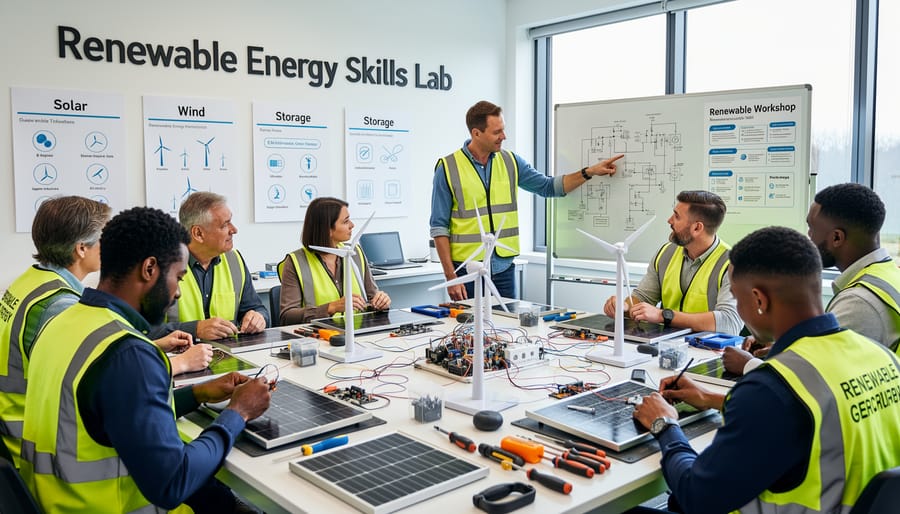
Getting into renewable energy doesn’t require a single, perfect path. Start with what you already have. If you’ve worked in mining, construction, or tunnelling, you likely know site safety, heavy equipment, surveying, and teamwork underground or in tough conditions. Those skills carry over to wind, solar, hydro, and storage projects more than most people expect.
For hands-on roles, look into apprenticeships. Electricians, millwrights, and equipment operators learn on the job while earning, and many clean energy sites need exactly these trades. If you lean toward engineering, geoscience, or planning, college and university programs in environmental science, electrical systems, or project management can open those doors. Short certificates are worth a look too, especially if you’re changing careers and want to fill a specific gap.
Then, connect with people. Local training providers, trade unions, and industry associations often know where hiring is heading long before postings go up. Support is also growing: a national, five-year initiative called Pathways to Power aims to modernize workforce development across Canada’s electricity sector.
Check official sources for current program details, and don’t be shy about asking questions. Most people in this field remember being new once.
Join the SubterraPulse Community
Careers in renewable energy grow stronger when people talk to each other, and that’s what we want SubterraPulse to be: a place where curiosity turns into connection. Whether you’re an apprentice electrician, a seasoned tunneller, a geoscience student, or someone just wondering if a clean energy career might suit you, you have a seat at the table here.
Start by sharing your own story. How did you land your first role? What surprised you on the job? Your experience could be the nudge another reader needs. Ask your questions in the discussions, too. Chances are someone else is wondering the same thing, and others in the community may have answers. Keep an eye out for research opportunities on the site, where your voice can help shape what we explore next.
Strong community engagement depends on listening as much as speaking. People here hold different views on the best path to a sustainable energy future, and that’s a strength. Be curious, be respectful, and welcome ideas that challenge your own. Our growing digital community connects people working above and below ground, so jump in and say hello.
Common Questions About Renewable Energy Careers in Canada
Curious about breaking in? These are the questions newcomers ask most, answered with what we know and what holds true across the sector.
Do I need a university degree to work in renewable energy?
Not always. Engineering, science, and planning roles usually call for a degree, but many technical and trades positions start with an apprenticeship or college training. The sector needs both kinds of people.
Do trades and tunnelling skills transfer to clean energy work?
Yes, often quite well. Electrical work, heavy equipment operation, construction, and underground experience all apply to building and maintaining wind, solar, storage, and other clean energy sites.
Is there training support available in Canada?
There is. Pathways to Power is a national five-year initiative to modernize workforce development across Canada’s electricity sector, backed by a $6.87 million investment from the Government of Canada’s Sectoral Workforce Solutions Program. Check official sources for current details on how to take part.
Why are there openings in the first place?
Demand is outpacing supply. EHRC forecasts that 6,000 to 8,000 additional renewable energy workers will be needed by 2030, and 13.1% of renewable energy roles remain unfilled.
Staying informed is easier than it sounds. Follow Canada’s electricity workforce programs, keep an eye on local colleges and training providers, and check in with industry associations as your interests take shape. If you’ve already made the leap, or you’re mapping out your own path, share your questions and stories with the SubterraPulse community. Someone else is probably wondering the same thing.
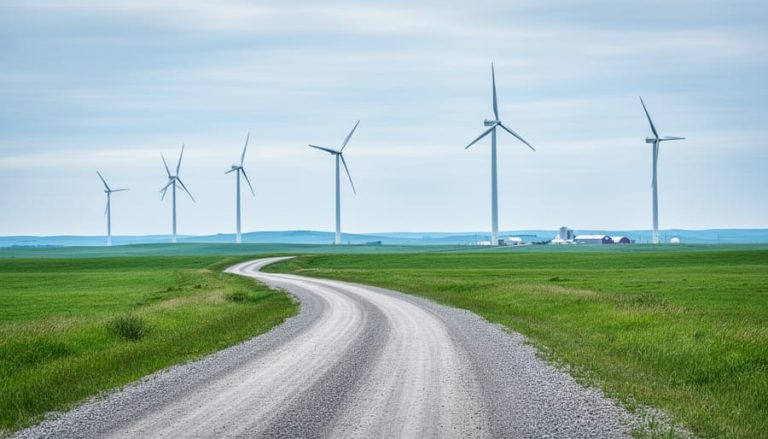
Picture that prairie horizon again, turbines turning above and the quiet work of shafts, tunnels and cables running below. Behind every one of those Canadian Renewable Energy Projects stands a person who decided to learn something new, whether that’s wiring a substation, reading the rock beneath a site, or running a control room.
The need is real. With thousands of additional workers expected to be required by 2030 and a share of roles still unfilled, the door is open to curious people from many backgrounds. Training support is growing too, including national efforts like Pathways to Power.
So take the next step. Look into an apprenticeship, a college program, or a local training provider. Then come share your story with us at SubterraPulse. Ask questions, trade ideas, and meet others building Canada’s clean energy future, above ground and below it.