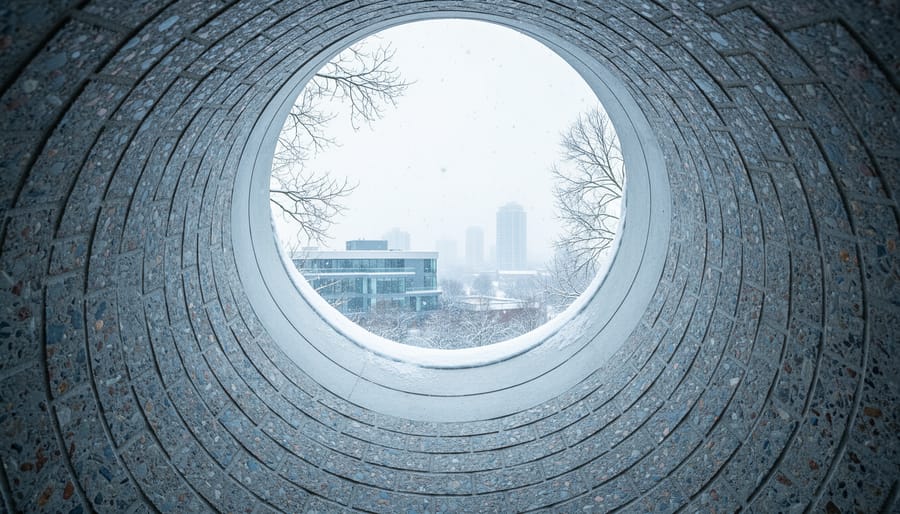

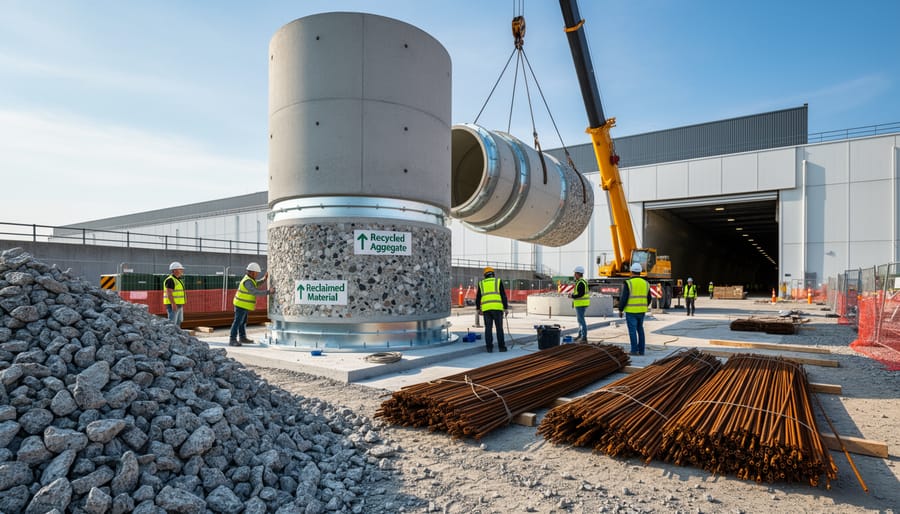
Integrate recycled aggregate masonry into ventilation shaft construction by sourcing materials from demolished concrete structures, reducing embodied carbon by up to 30% while maintaining structural integrity through proper gradation testing and mix design optimization.
Specify low-carbon cement alternatives like supplementary cementitious materials—fly ash, ground granulated blast furnace slag, or silica fume—which companies like this company increasingly recognize as essential for reducing greenhouse gas emissions in underground infrastructure projects.
Design shaft walls with thermal mass properties that naturally regulate air temperature fluctuations, minimizing mechanical ventilation energy requirements by positioning masonry units to maximize passive heat exchange in Canada’s varied climate zones.
The ventilation shafts threading through Canadian cities represent more than just functional infrastructure—they’re opportunities to reimagine how we build underground spaces. Traditional masonry techniques, refined over centuries, now merge with contemporary sustainability principles to create structures that serve both immediate operational needs and long-term environmental goals. These vertical passages, often overlooked in conversations about green building, actually present unique advantages for implementing eco-conscious construction methods.
Modern sustainable masonry goes beyond simply choosing greener materials. It encompasses thoughtful design that considers the entire lifecycle—from quarrying and manufacturing through decades of operation to eventual decommissioning. When applied to tunnel ventilation shafts, these principles create durable structures that actively contribute to energy efficiency rather than merely consuming resources.
Canadian underground environments, with their specific geological and climatic challenges, demand solutions tailored to local conditions. Permafrost considerations in northern regions, moisture management in coastal areas, and seismic requirements in western provinces all influence how we approach sustainable masonry design. Community engagement becomes crucial here, as residents increasingly expect transparency about construction methods affecting their neighborhoods and environmental footprint.
Why Ventilation Shafts Matter in Underground Infrastructure
Beneath Canada’s bustling cities and mountain ranges, a hidden network of tunnels keeps our underground infrastructure breathing. Ventilation shafts serve as the lungs of these subterranean systems, exchanging stale air for fresh while removing hazardous gases, controlling temperature, and providing emergency escape routes. Understanding underground infrastructure fundamentals reveals just how critical these vertical passages have become to modern tunnel operations.
The story of ventilation shafts mirrors our evolving relationship with the underground. Early Canadian tunnels relied on simple chimney-like structures that depended on natural air currents—effective but limited in scope. As projects grew more ambitious during railway expansion and urban development, engineers developed mechanical ventilation systems requiring larger, more complex shafts. The techniques employed in historical tunnel construction laid groundwork for today’s sophisticated designs, yet they also established resource-intensive practices that modern builders are now reconsidering.
This environmental footprint has pushed Canadian engineers toward sustainable alternatives, particularly as cities like Toronto, Montreal, and Vancouver expand their underground transit networks.
Today’s ventilation shafts must balance multiple demands: structural integrity in challenging geological conditions, minimal surface disruption in urban areas, and reduced environmental impact throughout their lifecycle. Sustainable masonry techniques offer promising solutions by using local materials, reducing carbon emissions, and creating structures designed for longevity rather than replacement. For communities near tunnel projects, these approaches mean cleaner construction sites, fewer truck trips hauling materials, and infrastructure that harmonizes with local architecture rather than disrupting it.
The shift toward sustainable shaft construction represents more than engineering innovation—it reflects a growing recognition that underground infrastructure shapes the communities above it, making responsible building practices essential for Canada’s future.
The Masonry Foundation: Traditional Techniques That Still Work
Brick and Stone Selection for Underground Durability
Selecting the right brick and stone for underground ventilation shafts is like choosing the foundation of a relationship—it needs to withstand pressure, adapt to change, and last for generations. In Canada’s challenging underground environments, where freeze-thaw cycles, persistent moisture, and structural loads converge, material choice becomes the difference between a century of service and costly failure.
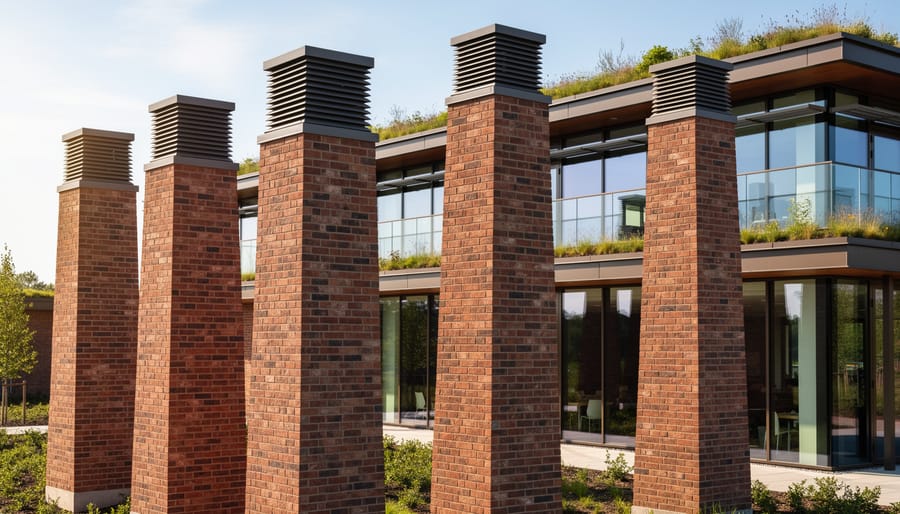
Traditional masons understood what modern engineers are rediscovering: not all bricks are created equal for subterranean work. Dense, low-porosity fired clay bricks with compressive strengths exceeding 50 MPa resist water absorption that can lead to spalling (surface flaking) when temperatures fluctuate. Think of these bricks as wearing waterproof jackets—they repel moisture rather than soaking it up like a sponge. Canadian projects increasingly specify locally-sourced clay bricks that have naturally weathered similar conditions for millions of years underground.
Stone selection follows similar wisdom. Granite and dense limestone varieties offer exceptional durability, while softer sedimentary rocks may deteriorate under constant dampness. The beauty here is sustainability: using regional materials reduces transportation emissions while supporting local economies and geological heritage.
Modern testing methods now quantify what stonemasons once knew intuitively—absorption rates, frost resistance, and chemical stability. Communities near tunnel projects can often visit material testing facilities or quarries, witnessing firsthand how these ancient building blocks are evaluated for modern performance. This tangible connection between past craftsmanship and future infrastructure creates inspiring opportunities for public engagement in sustainable construction.
Mortar Chemistry and Longevity
The secret to century-spanning underground masonry lies in understanding what makes mortar truly resilient beneath our feet. Traditional mortars often crumble in tunnel environments due to moisture infiltration, freeze-thaw cycles, and chemical reactions with surrounding soil—challenges particularly pronounced in Canadian climates where temperature swings can be dramatic.
Modern sustainable mortar formulations address these issues through innovative chemistry. Lime-based mortars, experiencing a renaissance in green construction, offer remarkable breathability that allows moisture to escape rather than becoming trapped within masonry walls. This prevents the destructive expansion that occurs when water freezes. Adding pozzolanic materials like fly ash or ground glass—industrial byproducts that would otherwise fill landfills—creates hydraulic properties that strengthen bonds even in damp conditions.
What makes these formulations especially exciting is their lower carbon footprint compared to conventional Portland cement mortars, which generate significant CO2 during production. Some Canadian projects now incorporate locally-sourced volcanic ash or metakaolin, reducing transportation emissions while supporting regional economies.
The science gets even more fascinating when we consider self-healing mortars containing limestone-producing bacteria. These microscopic helpers activate when cracks form, sealing minor damage before it compromises structural integrity. While still emerging, this biotechnology represents the future of maintenance-free underground infrastructure, ensuring ventilation shafts serve communities for generations without constant intervention.
Sustainable Material Innovations Changing the Game
Recycled and Reclaimed Materials in Practice
Across Canada, innovative projects are proving that yesterday’s waste can become tomorrow’s sustainable infrastructure. Take Montreal’s recent metro ventilation shaft renovation, where engineers incorporated crushed concrete from demolished highway overpasses into their masonry mix. The results? Structural integrity matching traditional materials while diverting over 300 tonnes from landfills.
In Toronto’s expanding transit network, reclaimed century-old bricks from heritage building demolitions found new purpose lining ventilation shafts. These weathered beauties, once destined for disposal, now contribute thermal mass and aesthetic character while reducing embodied carbon by 40% compared to manufacturing new materials. The project team discovered that properly graded reclaimed bricks actually outperformed expectations in compression testing.
Perhaps most exciting are industrial byproducts transforming ventilation shaft construction. Fly ash from coal power plants and slag from steel production are increasingly replacing traditional cement in masonry mortars. Vancouver’s recent underground parking ventilation system utilized a mortar blend containing 30% fly ash, achieving superior long-term strength while cutting CO2 emissions significantly.
These applications demonstrate that performance needn’t suffer when embracing circularity. Community involvement has proven essential too. Edmonton’s Waste Materials Exchange Program connects demolition contractors with tunnel projects, creating local jobs while keeping materials in productive use. Meanwhile, public workshops educate residents about these innovations, building support for sustainable infrastructure investments that benefit everyone underground and above.
Low-Carbon Cement: The Next Frontier
The binding agents we use in tunnel shaft masonry might not seem like headline material, but they’re quietly responsible for a significant environmental impact. Traditional Portland cement, the backbone of conventional mortar, is an emissions heavyweight. In fact, cement production accounts for approximately 8% of global carbon dioxide emissions. That’s why innovators are racing to develop alternatives that can transform how we build underground infrastructure.
Enter geopolymer cements, a fascinating category of binding agents created by activating industrial byproducts like fly ash or slag with alkaline solutions. These materials can match the strength of traditional cement while slashing carbon footprints dramatically. Early applications in tunnel construction have shown promising results, with some formulations demonstrating carbon emissions reduced by 30% or more compared to conventional alternatives.
Calcium carbonate-based cements represent another exciting frontier, mimicking natural mineralization processes to create durable bonds. Some experimental versions even absorb carbon dioxide as they cure, effectively reversing the typical emissions equation.
In Canada, where carbon reduction initiatives are gaining momentum, these innovations align perfectly with provincial and federal sustainability goals. Several research partnerships between universities and construction companies are testing these materials in cold-climate conditions, ensuring they’ll perform reliably in harsh Canadian underground environments. The transition won’t happen overnight, but each trial brings us closer to masonry techniques that honor both structural integrity and planetary health.
Energy-Efficient Design Principles for Ventilation Shafts
When we think about tunnel ventilation shafts, we’re not just building vertical passages—we’re creating living, breathing components of underground infrastructure that can work with nature rather than against it. The secret lies in understanding how sustainable masonry techniques can transform these structures into energy-efficient powerhouses that naturally regulate airflow and temperature.
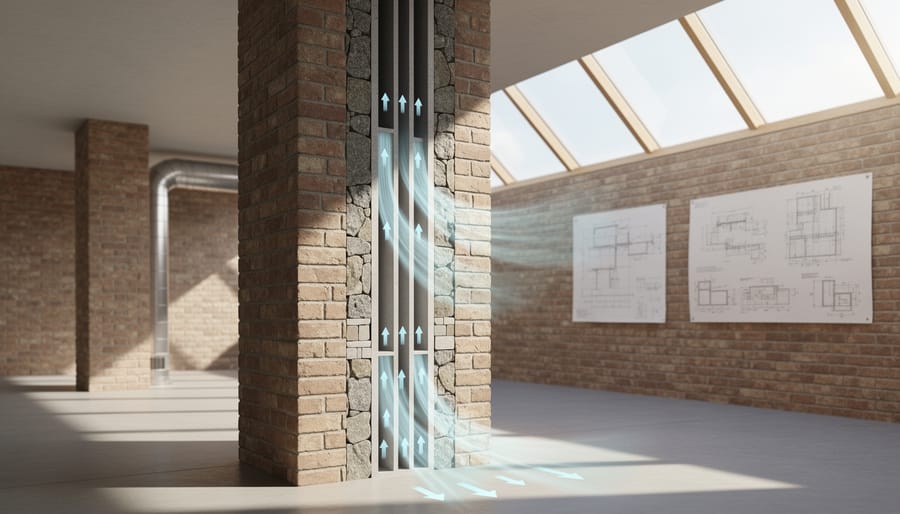
At the heart of energy-efficient ventilation shaft design is thermal mass optimization. Traditional masonry materials like brick, stone, and concrete possess remarkable abilities to absorb, store, and gradually release heat. In Canadian underground environments, where temperature differentials between surface and subterranean spaces can be significant, this property becomes a game-changer. During summer months, thick masonry walls absorb excess heat from incoming air, cooling it naturally before it reaches tunnel interiors. Come winter, those same walls release stored thermal energy, moderating temperature swings and reducing the need for mechanical heating systems. It’s essentially a thermal battery built right into the shaft walls.
Natural draft enhancement represents another brilliant intersection of traditional construction and modern efficiency. By carefully selecting masonry materials with specific surface textures and arranging them to create optimal airflow patterns, engineers can harness the stack effect—the natural tendency of warm air to rise. Rougher interior surfaces, for instance, create beneficial turbulence that improves air mixing, while strategically varied shaft diameters can accelerate airflow without consuming a single watt of electricity. Canadian projects are increasingly incorporating locally-sourced limestone and granite, materials that not only support these aerodynamic principles but also connect communities to their geological heritage.
Strategic placement considerations round out the design trinity. Positioning ventilation shafts to capture prevailing winds, orienting openings away from extreme weather exposure, and integrating green infrastructure at surface level all multiply the advantages of underground systems. Community members can participate in these decisions during planning phases, ensuring that ventilation infrastructure serves both functional and aesthetic purposes while respecting local environmental conditions.
These passive strategies don’t replace mechanical systems entirely, but they dramatically reduce dependency on energy-intensive equipment, creating resilient infrastructure that performs beautifully even during power disruptions.
Construction Methods That Minimize Environmental Impact
Modular Masonry Systems
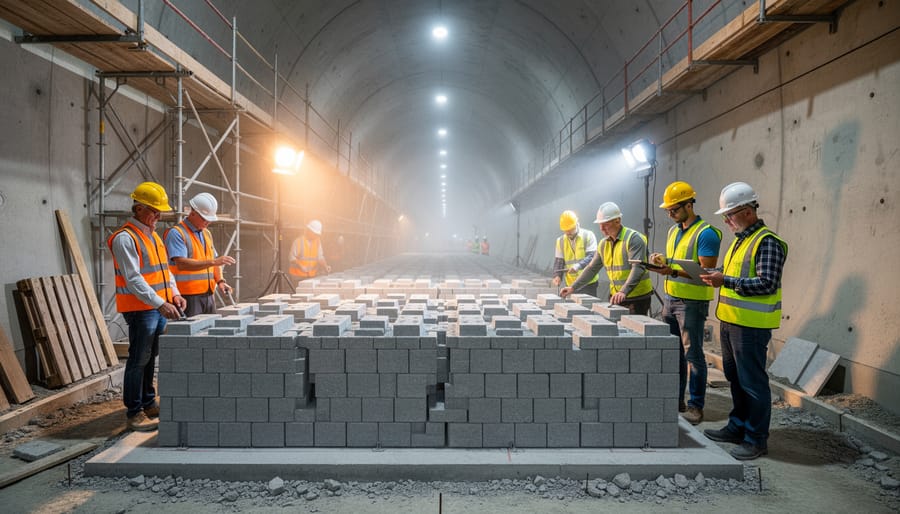
Imagine building with giant LEGO blocks deep underground—that’s essentially what modular masonry systems bring to tunnel ventilation shaft construction. These prefabricated components are manufactured above ground in controlled factory environments, then transported underground for assembly. The benefits? They’re transformative for both the environment and construction efficiency.
By creating masonry units in advance, crews slash on-site construction time by up to 40%. This means less energy consumption from equipment running underground and fewer worker hours in challenging subterranean conditions. Quality control improves dramatically too, since each component undergoes rigorous inspection before installation. In Canadian projects, where harsh winters and remote locations can complicate construction schedules, this approach has proven invaluable.
Material waste drops significantly—often by 30% or more—because precise manufacturing eliminates the cuts, adjustments, and errors common in traditional masonry work. Excess materials stay at the factory for reuse rather than becoming landfill waste. For communities near tunnel projects, this means reduced truck traffic, less noise pollution, and shorter construction timelines that minimize disruption.
The modular approach also opens doors for community involvement, as local manufacturers can participate in producing these components, creating jobs while supporting sustainable infrastructure development.
Water Management and Erosion Control
Managing water during shaft construction isn’t just about keeping workers dry—it’s about protecting the precious groundwater systems that communities depend on. In Canadian tunnel projects, where groundwater often intersects with construction zones, innovative approaches make all the difference.
Modern sustainable techniques employ closed-loop water recycling systems that capture, filter, and reuse construction water multiple times before discharge. This dramatically reduces freshwater consumption while preventing sediment-laden runoff from contaminating nearby aquifers. Think of it as giving water a second, third, and fourth job on-site before it clocks out.
Erosion control begins with strategic site planning. Biodegradable erosion blankets and silt fences made from natural fibers protect soil around shaft openings, while vegetated buffer zones absorb excess moisture. These green barriers work double-duty, stabilizing soil and creating habitat corridors for local wildlife.
During masonry installation, grout containment systems prevent cement-based materials from leaching into groundwater. Canadian projects increasingly use permeable grouting techniques that allow controlled water movement while maintaining structural integrity—a win-win for engineering and ecology.
Community involvement proves essential here too. Local watershed groups often partner with construction teams to monitor water quality throughout the project, ensuring transparency and building trust. This collaborative approach turns potential environmental concerns into opportunities for shared stewardship of underground water resources.
Canadian Innovations and Case Studies
Canada’s commitment to sustainable infrastructure shines through several pioneering tunnel projects that have embraced innovative ventilation shaft masonry techniques. These real-world examples demonstrate how engineering excellence can align with environmental stewardship while addressing the unique challenges of Canadian climates and geology.
The Eglinton Crosstown LRT in Toronto stands as a remarkable testament to sustainable thinking in tunnel construction. During the project’s development, engineers incorporated locally-sourced limestone and recycled aggregate materials into ventilation shaft masonry, reducing the carbon footprint by approximately 30% compared to conventional methods. The shafts feature thermal mass properties that help regulate temperature fluctuations naturally, minimizing energy demands for mechanical ventilation systems. Community consultations during the planning phase revealed concerns about construction impacts, leading to the adoption of low-noise masonry techniques and air quality monitoring stations that residents could access online in real-time.
Montreal’s REM (Réseau express métropolitain) project has pushed boundaries by integrating green infrastructure directly into ventilation shaft design. Several shafts incorporate living wall systems on their exterior masonry surfaces, creating urban green spaces that filter air pollutants while providing aesthetic value to neighborhoods. The project team worked closely with local horticultural experts and community groups to select native plant species that could thrive in Montreal’s harsh winters, demonstrating how technical infrastructure can serve multiple purposes beyond its primary function.
In Vancouver, the Broadway Subway Project showcases adaptive reuse principles applied to underground applications. Engineers developed a hybrid masonry system using salvaged materials from decommissioned industrial buildings, giving new life to heritage bricks while maintaining structural integrity. This approach resonated deeply with Vancouver’s sustainability-conscious population and sparked conversations about circular economy principles in infrastructure development.
These projects share common lessons: early community engagement creates better outcomes, local material sourcing reduces environmental impact while supporting regional economies, and innovative thinking transforms ventilation shafts from purely functional structures into multifunctional community assets. Canadian ingenuity continues proving that sustainable infrastructure need not compromise performance or safety.
Maintenance and Long-Term Performance
When you invest in sustainable masonry techniques for tunnel ventilation shafts, you’re not just building for today—you’re creating infrastructure that can serve communities for generations with significantly reduced maintenance demands. Here’s the inspiring part: projects across Canada have demonstrated that eco-friendly masonry approaches often outperform conventional methods in long-term durability while cutting lifecycle costs by up to 40%.
The secret lies in the inherent resilience of sustainable materials. Natural hydraulic lime mortars, for instance, allow moisture to migrate through masonry rather than becoming trapped, preventing the freeze-thaw damage that plagues traditional Portland cement structures in Canadian climates. This breathability means fewer repair cycles and extended periods between interventions. Similarly, locally-sourced stone and reclaimed brick develop stronger bonds over time, creating self-healing properties as minerals naturally fill micro-cracks.
Effective inspection protocols make all the difference in maximizing these benefits. Communities can implement sustainability-focused assessments through these key steps:
- Schedule bi-annual visual inspections focusing on mortar joint integrity, moisture patterns, and vegetative growth that might indicate beneficial or problematic biological activity
- Use thermal imaging to identify air leakage and insulation performance without invasive testing
- Document carbon sequestration rates in lime-based mortars to track environmental performance alongside structural health
- Engage local heritage masons and environmental scientists to provide multi-perspective evaluations
- Create digital records accessible to community stakeholders, fostering transparency and collective stewardship
When restoration becomes necessary, sustainable techniques shine even brighter. Repairs using compatible natural materials integrate seamlessly with original construction, maintaining structural continuity rather than creating weak points at repair interfaces. Many Canadian municipalities now involve community volunteers in non-technical monitoring activities, building public connection to underground infrastructure while reducing municipal costs. This collaborative approach transforms maintenance from a burden into an opportunity for education and community building, ensuring these vital structures remain sustainable in every sense of the word.
Getting Involved: Community and Professional Opportunities
The exciting world of sustainable tunnel ventilation is calling for curious minds and passionate advocates like you! Whether you’re a seasoned professional or simply fascinated by underground innovation, there are numerous ways to get involved and make a meaningful impact.
Canadian research institutions are leading the charge in developing greener tunneling technologies. Universities across the country regularly seek collaborators, volunteers for citizen science projects, and attendees for public lectures on underground infrastructure. Organizations like the Canadian Tunnelling Association and the Canadian Green Building Council offer networking events, workshops, and certification programs that welcome newcomers and experts alike.
For those eager to contribute directly, consider joining local environmental advocacy groups focused on infrastructure sustainability. Many municipalities host public consultations about tunnel projects where your voice can shape future developments. Industry conferences such as the North American Tunneling Conference provide platforms to share ideas and learn from pioneers in the field.
Right here at SubterraPulse, we’re building a vibrant community dedicated to exploring Canada’s underground environments. Share your observations, ask questions, and connect with fellow enthusiasts through our platform. Whether you’re documenting historic ventilation shafts in your neighborhood or proposing innovative masonry solutions, your perspective enriches our collective understanding.
The future of sustainable tunneling depends on diverse voices coming together. Your curiosity, expertise, and commitment to environmental stewardship are valuable contributions to this evolving conversation. Join us in shaping underground infrastructure that serves both people and planet for generations to come.
The future of sustainable ventilation shaft construction shines brightly, illuminated by the perfect marriage of time-tested masonry wisdom and cutting-edge environmental innovation. As we’ve explored throughout this journey into Canadian underground infrastructure, the path forward isn’t about choosing between tradition and progress—it’s about weaving them together into something stronger than either could be alone.
Every ventilation shaft built with sustainable masonry techniques represents more than just infrastructure. It’s a statement about our commitment to the communities above ground and the ecosystems we touch below. From the permeable mortars that allow groundwater flow to the locally-sourced materials that reduce carbon footprints, these innovations prove that environmental responsibility and structural excellence go hand in hand.
The conversation about sustainable underground construction is far from over—in fact, it’s just gaining momentum. Whether you’re a tunneling professional exploring new methods, a green technology enthusiast tracking emerging solutions, or simply someone who cares about building a better future beneath our feet, your voice matters in this ongoing dialogue.
We invite you to stay engaged with these evolving practices. Share your experiences, ask questions, and contribute your unique perspective to the community of builders, engineers, and environmental advocates working together to reshape how we think about underground spaces. The masonry techniques of tomorrow will be shaped by the conversations we have today, and there’s room at the table for everyone committed to sustainable innovation in Canada’s underground environments.