
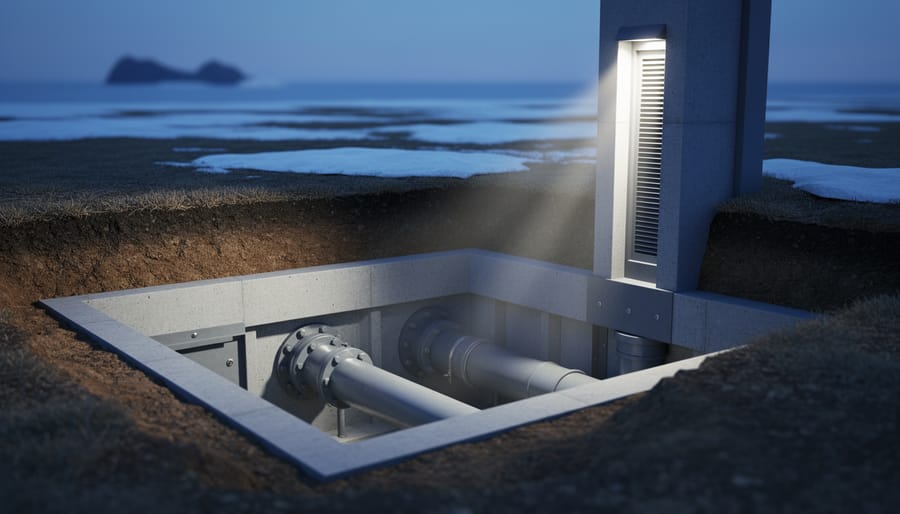

The United Nations climate reports are comprehensive scientific assessments that document how human activity is warming the planet, disrupting natural systems, and affecting billions of people worldwide. These reports, produced by the Intergovernmental Panel on Climate Change and UN agencies, synthesize thousands of peer-reviewed studies to provide the most authoritative picture of our climate crisis and pathways forward. The latest assessment cycle, completed in 2023, makes clear that we’re running out of time but not out of options.
For Canadians, these findings carry particular weight. Our country is warming at twice the global average, threatening permafrost stability, coastal infrastructure, and the integrity of underground systems we rarely think about. As extreme weather intensifies, the benefits of going underground become harder to ignore. Subterranean infrastructure offers natural insulation, protection from surface climate impacts, and opportunities for geothermal energy storage that can help us adapt while reducing emissions.
What makes these reports essential reading isn’t their doom and gloom. They’re roadmaps. They outline concrete mitigation strategies and adaptation measures grounded in hard science, not wishful thinking. For anyone involved in sustainable development, green technology, or infrastructure planning, understanding what the UN climate reports actually say is the difference between building for the past and preparing for the reality ahead. The science is settled. The question now is how we respond, particularly in designing resilient systems that work with our environment rather than against it.
Understanding the UN Climate Report Series
The Intergovernmental Panel on Climate Change (IPCC) produces what are commonly known as UN Climate Reports, comprehensive assessments that synthesize thousands of scientific studies to provide the most authoritative picture of our changing climate. These aren’t single documents but coordinated series released over several years, bringing together hundreds of scientists from around the world to review and distill the latest evidence on how Earth’s climate system is shifting and what it means for humanity.
The most recent series, the Sixth Assessment Report (AR6), unfolded between 2021 and 2023. It warned that climate change is causing dangerous disruption in nature and affecting billions of people, making these findings impossible to ignore whether you’re a policymaker, engineer, or someone simply concerned about your community’s future. The AR6 release dates spanned nearly two years, with each installment building on the previous one to create a complete picture.
The report series is structured around three specialized Working Groups, each tackling a distinct aspect of climate science, plus a final Synthesis Report that ties everything together:
- Working Group I: The Physical Science Basis
- Released on 9 August 2021, this report examines the fundamental science of climate change, how greenhouse gases trap heat, how much warming we’ve already experienced, and what physical changes we can expect in temperature, precipitation, and extreme weather events.
- Working Group II: Impacts, Adaptation and Vulnerability
- Released on 28 February 2022, this installment explores how climate change affects ecosystems, human systems, and infrastructure, while identifying strategies communities can use to adapt and build resilience.
- Working Group III: Mitigation of Climate Change
- Released on 4 April 2022, this report focuses on solutions, the technologies, policies, and systemic changes needed to reduce greenhouse gas emissions and limit future warming.
- Synthesis Report
- The AR6 Synthesis Report released on 20 March 2023, weaves together findings from all three Working Groups, providing an integrated overview of where climate science stands and what actions are most urgent.
For Canadians concerned about underground infrastructure, these reports offer crucial context. They don’t just describe global trends, they provide the scientific foundation for understanding why our tunnels are flooding more often, why permafrost is destabilizing northern facilities, and what engineering solutions might actually work in a rapidly changing climate.
Climate Disruption and What Lives Beneath
Permafrost Challenges in Northern Canada
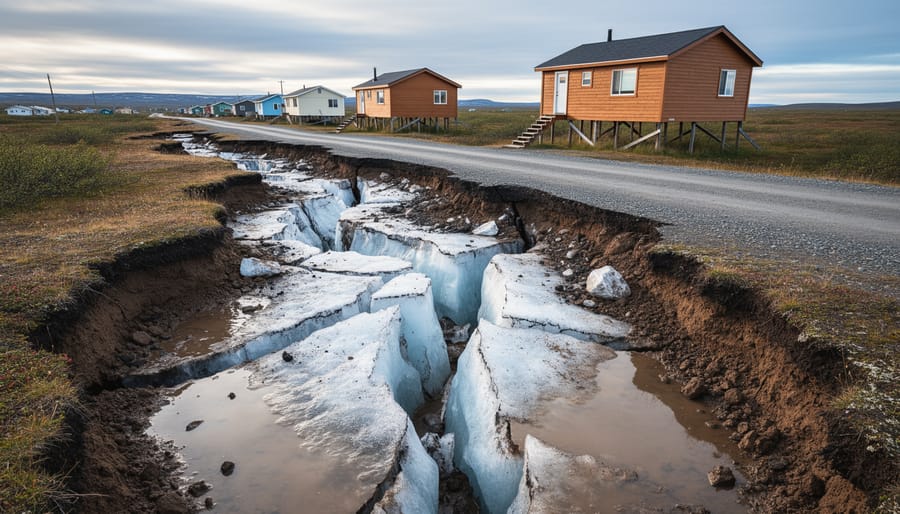
In Canada’s North, where roughly 40% of the landmass rests on permafrost, warming temperatures are rewriting the rules of what can safely exist underground. The UN Climate Report’s findings on accelerating Arctic warming hit particularly hard here, permafrost that remained frozen for millennia now thaws at rates faster than most engineering models anticipated. This affects everything from how underground spaces are used in northern communities to the structural integrity of existing facilities.
Indigenous communities face especially acute challenges. Many rely on traditional underground food storage cellars and modern infrastructure built directly into or atop permafrost. As ground ice melts, the soil loses its load-bearing capacity, tunnels buckle, storage facilities crack, and foundations shift unpredictably. Research on permafrost and infrastructure shows that even small temperature increases trigger dramatic changes in ground stability, creating cascading risks for homes, water systems, and cultural sites that depend on frozen earth.
The disruption extends beyond physical structures. Centuries of knowledge about safe underground construction in permafrost regions suddenly requires revision, forcing communities to balance traditional practices with new climate realities while maintaining their connection to the land.
Groundwater and Urban Underground Infrastructure
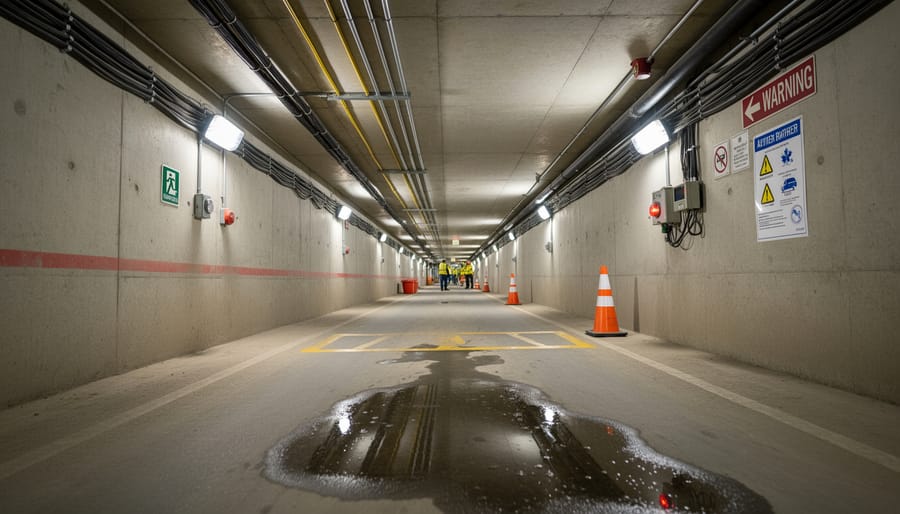
Canada’s urban underground networks weren’t designed for the extreme weather patterns we’re seeing today. The UN Climate Reports highlight how shifting precipitation patterns create compound risks for cities, and our subway systems, utility tunnels, and underground parking structures are increasingly vulnerable. When a month’s worth of rain falls in a single afternoon, older drainage systems can’t keep pace, turning underground spaces into flood zones.
Toronto’s 2013 flash flood offered a stark preview: subway stations became waterfalls, and commuters waded through waist-deep water. Montreal, Vancouver, and Calgary have all experienced similar incidents as intense precipitation events become more frequent. Understanding the basics of tunneling helps explain why these structures face unique challenges, water always finds the lowest point, and underground infrastructure sits precisely where gravity pulls every drop.
The problem extends beyond dramatic flooding. Changing groundwater tables stress aging concrete and corrode metal supports. Freeze-thaw cycles intensify as winter temperatures fluctuate more wildly, cracking tunnel linings and utility conduits. In coastal cities, sea level rise pushes saltwater into freshwater aquifers, accelerating deterioration of buried infrastructure.
Yet these challenges aren’t insurmountable. Cities are retrofitting ventilation systems, installing smart sensors that detect moisture buildup early, and redesigning drainage to handle extreme flows. The key is recognizing that yesterday’s infrastructure standards no longer match tomorrow’s climate reality.
Turning Climate Challenges Into Green Technology Opportunities
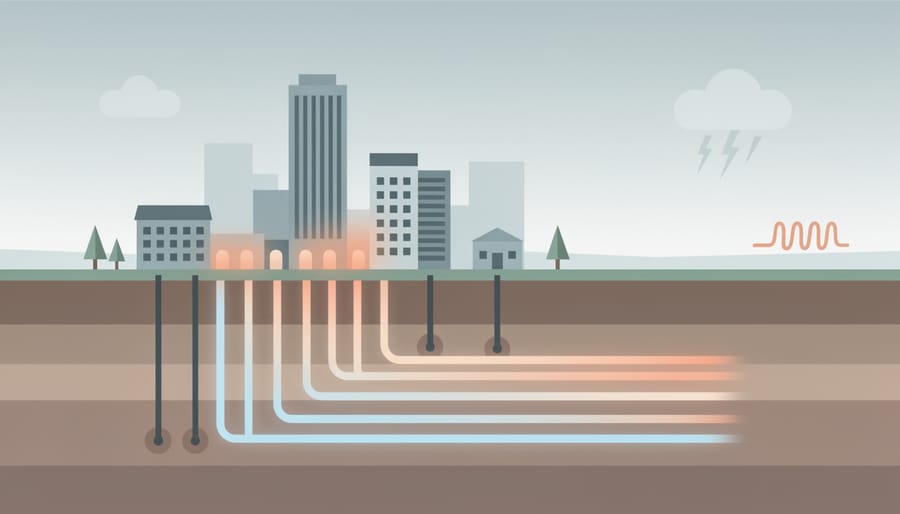
Canada’s underground realm isn’t just vulnerable to climate change, it’s also one of our greatest assets in fighting it. While the UN climate reports document the urgency of the crisis, they also point toward solutions that leverage what’s beneath our feet. From coast to coast, Canadian innovators are transforming subterranean spaces into hubs for renewable energy, carbon reduction, and climate-smart infrastructure.
Geothermal energy represents one of the most promising underground climate solutions. Canada’s geology provides exceptional opportunities for ground-source heat pumps and deep geothermal systems that can heat and cool buildings year-round with minimal emissions. Communities across British Columbia, Alberta, and Ontario are already tapping into stable underground temperatures to reduce reliance on fossil fuels. What makes this technology particularly exciting is its reliability: unlike solar or wind, geothermal delivers consistent energy regardless of weather conditions.
Underground energy storage is another frontier where Canadian engineers are making real progress. Compressed air energy storage facilities use excavated caverns to store energy during low-demand periods, then release it when the grid needs support. These systems help integrate intermittent renewable sources like wind power into our energy mix. Ontario’s Bruce Peninsula and Manitoba’s stable rock formations offer ideal geological conditions for this technology, turning old mines and purpose-built caverns into batteries for the renewable energy future.
Sustainable tunneling innovations are reducing the carbon footprint of underground construction itself. New tunnel boring machines run on electricity rather than diesel, cutting emissions during excavation. Some Canadian firms are experimenting with carbon-sequestering concrete for tunnel linings, materials that actually absorb CO₂ over their lifetime. These advances mean that expanding underground transit systems, essential for reducing surface traffic emissions, can be done with far less environmental impact than previous generations of infrastructure.
Carbon capture and storage takes the concept even further. Deep saline aquifers and depleted oil and gas reservoirs beneath the Prairies can sequester millions of tonnes of carbon dioxide, effectively removing it from the atmosphere for geological timescales. Alberta’s Quest project has already demonstrated that this technology works at commercial scale, safely storing CO₂ more than two kilometers underground.
What ties these opportunities together is their dual benefit: they help Canada adapt to climate impacts while actively reducing emissions. The underground isn’t just something we need to protect from climate change. It’s a resource we can harness to build the zero-carbon future the UN reports tell us we need.
Adaptation Strategies for Canada’s Subterranean Future
Canadian underground infrastructure must evolve beyond static designs to embrace adaptive, climate-responsive engineering. The UN reports emphasize that successful adaptation requires flexible systems capable of responding to accelerating environmental shifts, not just accommodating historical climate patterns.
Modern monitoring technologies form the foundation of resilient subterranean design. Real-time sensors tracking soil moisture, temperature fluctuations, and structural stress allow engineers to detect problems before they escalate. In Toronto’s subway tunnels, integrated monitoring systems now provide continuous feedback on groundwater intrusion and foundation stability, enabling proactive maintenance rather than reactive repairs. These digital networks transform underground spaces from hidden vulnerabilities into intelligently managed assets.
Material selection has become equally critical. Traditional concrete and steel remain important, but engineers now incorporate permeable materials that manage water movement more effectively, reducing flood risk in urban tunnels. Geopolymer concrete, which performs better under freeze-thaw cycles than conventional mixes, shows particular promise for northern applications where permafrost thaw creates unpredictable ground conditions.
Design principles must account for uncertainty itself. Engineers are building redundancy into critical systems, creating multiple drainage pathways rather than single points of failure. Vancouver’s underground utility corridors now include adjustable supports that compensate for ground settlement, recognizing that climate variability makes precise predictions impossible. This approach costs more upfront but prevents catastrophic failures that would be exponentially more expensive.
Collaboration between climate scientists and infrastructure planners has become essential. Projects like Montreal’s expansion of underground pedestrian networks now incorporate climate projections into their 50-year planning horizons, ensuring today’s construction decisions remain viable as conditions change. This forward-thinking approach transforms the challenge of climate uncertainty into an opportunity for innovation in Canadian subterranean engineering.
What You Can Do: Community Engagement and Local Action
You don’t need to be a climate scientist or infrastructure engineer to make a difference. Climate adaptation thrives when people connect, share knowledge, and push for practical change in their own neighbourhoods. Start by learning what underground infrastructure exists in your area, subways, utility tunnels, storage facilities, geothermal systems, and how local planners are (or aren’t) preparing these spaces for climate pressures. Attend municipal meetings where infrastructure budgets and green technology proposals get debated. Your voice matters when councils decide whether to retrofit aging systems or invest in climate-resilient designs.
Community engagement accelerates solutions when residents collaborate with engineers, environmental groups, and Indigenous knowledge keepers who understand local conditions. Join or support organizations advocating for sustainable underground development, whether that’s geothermal district heating in your city or monitoring permafrost stability in northern communities. Share what you learn through SubterraPulse and similar platforms that connect Canadians working on underground climate challenges.
Push your workplace, school, or local business to consider underground spaces in their sustainability plans. Could your building tap into geothermal cooling? Can your community advocate for flood-resilient transit tunnels before the next extreme weather event? Write to your MP or MPP about funding green infrastructure that uses underground environments for renewable energy storage or carbon capture.
Small actions compound. When you understand the climate disruption affecting billions, as the UN reports make clear, you realize that Canada’s underground infrastructure isn’t just pipes and concrete. It’s opportunity waiting for people ready to engage.
The UN Climate Reports make it clear: climate change is disrupting nature and affecting billions of people worldwide. For Canada, this global challenge presents a unique opportunity to rethink what lies beneath our feet. Our underground environments are not just vulnerable infrastructure requiring protection, they are powerful assets for both adapting to and mitigating climate impacts.
From permafrost regions in the North to urban tunnel networks in our cities, Canadian subterranean spaces can become laboratories for innovation. Geothermal energy systems, underground thermal storage, sustainable tunneling techniques, and carbon sequestration projects all demonstrate how going beneath the surface offers practical climate solutions. The urgency highlighted in the UN reports does not demand pessimism. It calls for informed, creative action grounded in the realities of our changing climate.
What happens next depends on all of us. Engineers, policymakers, Indigenous communities, green technology enthusiasts, and everyday Canadians each have a role in shaping how we design, protect, and utilize underground infrastructure for a resilient future. The SubterraPulse community exists to connect these voices, share emerging solutions, and celebrate the innovations happening in Canadian underground environments. Whether you are advocating for sustainable infrastructure in your municipality, exploring careers in green technology, or simply curious about what lies beneath, your engagement matters. Together, we can turn the warnings in these reports into actionable progress.




+ There are no comments
Add yours